NBA Live Betting Rewards Patience, Not Speed
 Available in US
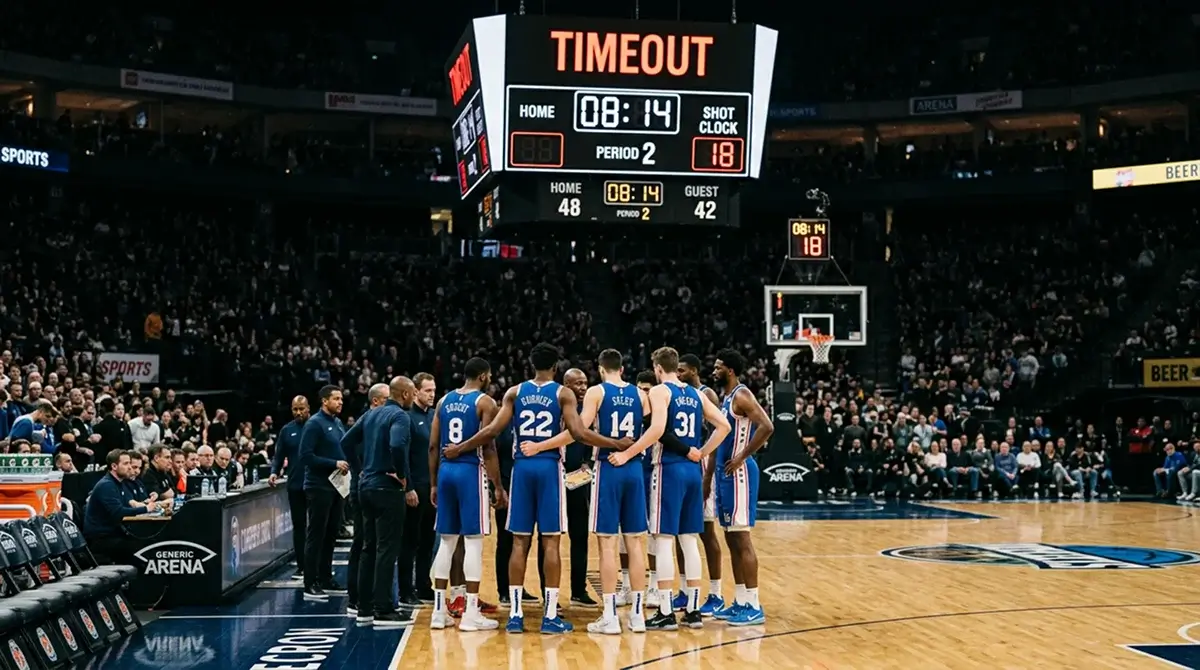
The first live bet I ever placed on an NBA game was pure panic. The Lakers were down 14 in the second quarter, the live spread had shifted from -3 to +6.5, and I thought I was getting a bargain. I was not. The deficit grew to 22 by halftime, and the Lakers lost by 18. What I interpreted as an overreaction by the live market was, in fact, the market correctly reading that the game was over as a competitive contest. That lesson — the live market is usually smarter than your gut — took me two seasons to fully absorb.
Live in-play betting now constitutes over 62% of the online sports wagering market, making it the dominant form of sports betting globally. The NBA, with its continuous scoring, frequent momentum shifts, and TV timeouts that create natural betting windows, is one of the most popular live-betting sports in the world. The league generates 1.3 billion broadcast hours annually, and a growing share of that viewership is actively betting while watching.
When the Live Market Overreacts — and When It Does Not
NBA games produce scoring runs. A team goes on a 12-0 run over three minutes, and the live spread lurches in their direction. The question for the live bettor is whether the run reflects a genuine shift in game quality or temporary variance — hot shooting that will cool, turnovers that will stop, a defensive intensity that cannot be sustained for 48 minutes.
My framework for assessing live overreactions uses three filters. First, shot quality. If the run was fuelled by contested three-pointers and circus layups, it is likely variance — the shots were difficult and happened to fall. If the run was driven by open looks generated by a scheme change or a defensive breakdown, the shift is real and the live market is probably right. Second, turnover context. A 12-0 run built on four turnovers by the trailing team is more meaningful than one built on made shots alone, because turnovers indicate a broader problem (ball-handling pressure, fatigue, mental errors) that tends to persist. Third, lineup context. If the run coincided with a bench unit entering for the trailing team, it is partially a talent gap rather than a momentum shift — and the starters will return to normalise the game.
The overreaction window is narrow and specific. In my experience, the live market overreacts most reliably during the first six minutes of the third quarter, when a team comes out of the locker room with a burst of energy from halftime adjustments. That energy often fades by the eight-minute mark, but the live spread has already moved two to three points in the surging team’s direction. If the underlying fundamentals — shooting quality, turnover rate, rebounding margin — have not changed, the pre-surge price was more accurate, and the current price is temporarily inflated.
Live Totals: Reading Pace Shifts in Real Time
Pre-match totals are priced using projected pace and efficiency. Live totals reprice continuously based on the actual pace and scoring rate observed in the game. The key insight: the live total algorithm extrapolates the current scoring rate forward, and that extrapolation is most unreliable in the first quarter.
Here is why. First quarters are noisy. Teams come out with scripted plays that produce higher or lower scoring rates than their true average. A team might score 34 points in the first quarter on 58% shooting — an unsustainable clip that the live total model extrapolates into a 240-plus projected total. The second quarter, driven by bench units and more improvisational offence, almost always regresses toward the mean. If you see a live total that has spiked after a hot first quarter, the under is worth considering — particularly if the hot shooting was driven by an unusually high three-point percentage that is statistically likely to cool.
The reverse is true for cold starts. Two defensive teams trading misses through a low-scoring first quarter will push the live total down to 195 or 200, and the over becomes attractive if the low scoring was driven by poor shooting rather than genuinely elite defence. The distinction matters: a game where both teams shot 35% because they were taking and missing good looks is different from a game where both teams shot 35% because they were being forced into terrible shots. The first scenario regresses; the second does not.
Basketball accounts for 15% to 18% of global betting turnover, and live totals represent one of the most liquid in-play markets. The liquidity means the pricing is reasonably sharp — but the first-quarter extrapolation bias creates a systematic edge for bettors who can distinguish real pace from temporary shooting variance.
Managing Your Bankroll During a Live Betting Session
Live betting is emotionally intense. The speed of NBA basketball — possessions every 15 seconds, lead changes every few minutes, momentum swings that feel enormous in the moment — creates an environment where discipline erodes faster than in any other form of betting. I have two non-negotiable rules for live betting sessions.
First, a session stake cap. Before the game tips off, I decide how much of my bankroll I am willing to allocate to live bets on that game. Typically, that is three to four units — enough to take two or three positions without risking meaningful bankroll damage. When the session cap is reached, I stop. No exceptions, no “one more because I see a great spot.” The cap is a hard boundary that protects me from the incremental escalation that live betting naturally produces.
Second, a minimum-conviction threshold. I only place a live bet when my edge estimate exceeds 5% — a higher bar than the 3% I require for pre-match bets. The higher threshold accounts for the wider margins on live markets, the faster decision-making that increases error rates, and the emotional bias that comes from watching a game in real time. If I cannot articulate why the current live price is wrong and by how much, I do not bet. Watching a game without betting on it is an underrated skill.
The 40% Remote Gaming Duty that took effect in April 2026 has pushed operators to invest more heavily in live products, which generate higher engagement and handle per customer. That investment means the live betting experience — speed of odds updates, range of available markets, cash-out functionality — is better than it has ever been. But the operator’s incentive is engagement, not your profitability. The better the live product becomes, the more disciplined you need to be about when and how you use it.
One pattern I use regularly: I place my pre-match bet, then monitor the live market for opportunities to hedge or double down. If I took the over at 218.5 pre-match and the first half comes in at 120 points (on pace for 240), the live second-half under offers a natural hedge. If I took a team at -3.5 and they are down two at halftime with their star player heating up, the live spread at +1.5 might offer a chance to middle — winning both bets if the team wins by exactly one or two points. These are structured plays, not reactions. The pre-match bet sets the position; the live bet manages it. That framework keeps my bankroll management intact across the full duration of a game.
When is the best time to place a live bet on an NBA game?
The most reliable live betting windows occur during the first six minutes of the third quarter, when halftime adjustments create temporary overreactions in the live spread, and after a first quarter with extreme shooting variance, when the live total has extrapolated an unsustainable pace. Both situations create pricing that tends to correct in the subsequent minutes.
Are NBA live betting margins wider than pre-match margins?
Yes. Live betting margins at UK bookmakers are typically 6% to 10% on main markets, compared to 4% to 5% pre-match. On secondary live markets like quarter totals and live player props, margins can exceed 12%. The wider margins reflect the faster pricing updates, lower volume per individual market, and higher operational cost of real-time odds management.
Written by the editors at bet Tips nba.