NBA Sharp Money Tracking and Betting Indicators
 Available in US
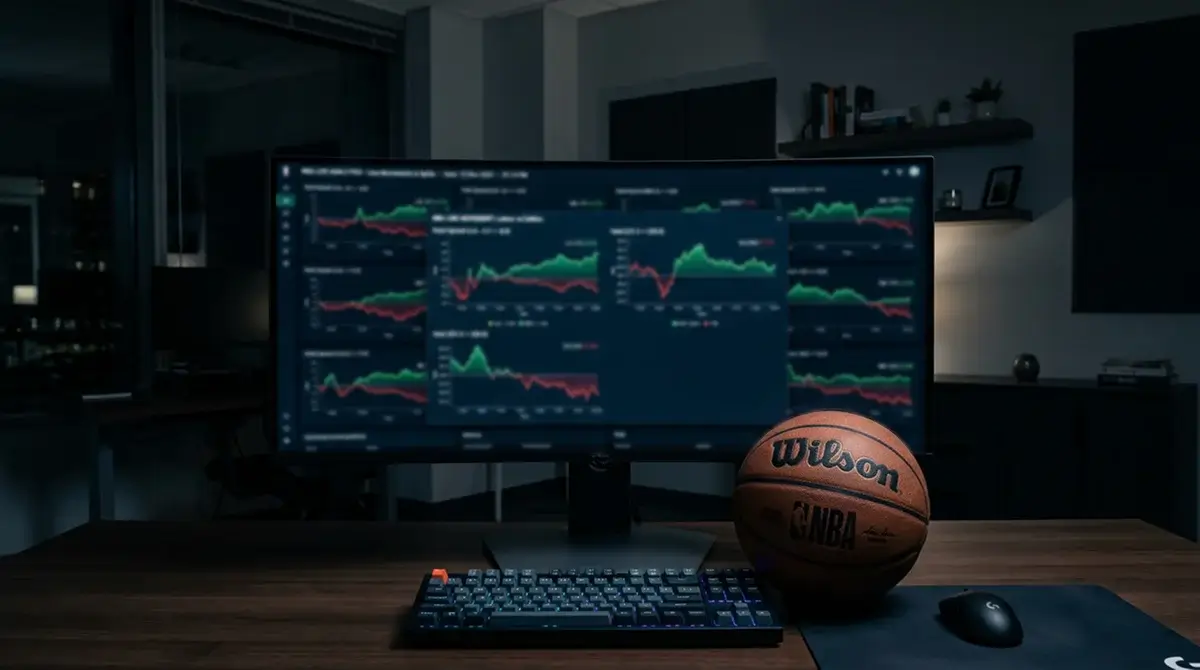
In January 2024, I watched a line move that made no sense on the surface. The Pacers were hosting the Wizards — a heavy mismatch on paper — and the opening spread was Indiana -9.5. Within two hours of the line posting, it shifted to Indiana -11.0. No injury news. No weather concerns (it is basketball, after all). No viral social media post tilting public sentiment. The only explanation was sharp money — professional bettors with large accounts who moved fast and moved the number.
FanDuel and DraftKings together control roughly 75% of the regulated US betting market, and those platforms see the sharpest action first. When a line moves at FanDuel, the rest of the market follows — including the UK books that derive their NBA pricing from US-originating lines. Learning to read those moves is one of the few genuinely repeatable edges in NBA betting, because you are not outsmarting the bookmaker directly. You are watching smarter bettors do it and riding their wake.
Adam Silver has spoken publicly about the need for better oversight of the massive betting activity surrounding the NBA. The volume of money flowing through these markets — over 600 billion dollars in cumulative legal US wagers since 2018 — means that every line movement carries information. Your job is to separate the signal from the noise.
Analyzing Handle Percentages Versus Ticket Percentages
Two numbers tell you almost everything about who is betting what. Ticket percentage shows the proportion of individual bets on each side. Handle percentage shows the proportion of money. The gap between them is where sharp action hides.
Say 72% of tickets are on the Lakers -5.5 but only 55% of the handle is on the Lakers. That means a large number of small bets favour the Lakers, but the bigger wagers — the ones from professional bettors with larger bankrolls — are on the other side. The public loves the Lakers; the sharps love the opponent. When ticket and handle percentages diverge by more than 15 points, that divergence is worth paying attention to.
Now, a nuance that most “sharp money” articles skip: the presence of sharp money does not guarantee a result. Professional bettors operate on expected value over hundreds of bets. They lose individual wagers regularly. What the handle split tells you is where the informed opinion sits, not where the guaranteed outcome sits. Think of it as a weather forecast: if the sharp money says 65% chance of rain, you bring an umbrella. You do not cancel your life.
I use handle-versus-ticket splits as a filter, not a trigger. If my own analysis already points toward a side and the sharp money confirms it, I bet. If my analysis disagrees with the sharps, I re-examine my reasoning before acting — and about half the time, that re-examination reveals a factor I missed. The other half, I trust my work and accept that smart people can disagree.
Reverse Line Movement: The Sharpest Signal
Reverse line movement is the phenomenon where the line moves against the side receiving the majority of bets. Seventy percent of tickets are on the Celtics -3.5, but the line drops to -3.0. The public is hammering Boston, yet the number moves toward the other team. That is reverse line movement, and it is the single most reliable indicator of sharp action.
The mechanism is straightforward. Bookmakers do not move lines based on the number of bets — they move lines based on liability. If a small number of large, professional-sized wagers land on the underdog, the book adjusts the line to manage its risk, even though the ticket count overwhelmingly favours the favourite. The movement reveals that the book respects the sharp money more than the public consensus.
In the US, legal sportsbooks processed record bookmaker revenue of nearly 17 billion dollars in 2025 — a 22.8% year-on-year increase. That revenue comes, in large part, from the gap between where the public bets and where the line settles. Reverse line movement is the visible trace of that process.
I track RLM using a simple three-step checklist. First, identify games where the ticket split exceeds 65% on one side. Second, check whether the line has moved in the opposite direction. Third, confirm that the movement occurred before any injury or news event that would explain it independently. If all three conditions hold, the reverse line movement is driven by sharp action. If the movement happened after an injury report, it is just the market repricing — not a sharp signal.
Steam Moves: When the Line Shifts Fast
A steam move is a rapid, significant line shift — usually one to two points in under 30 minutes — triggered by coordinated sharp betting across multiple sportsbooks simultaneously. It is the most dramatic form of sharp action and the hardest to exploit, because by the time you notice the move, the value has already been captured.
Steam moves happen when a professional syndicate or a group of connected sharps identifies a mispriced line and hits it at multiple books in quick succession. The first book adjusts, the second follows, and within minutes the entire market has shifted. If you happen to have the same side already in your bet slip when the steam hits, congratulations — you just got closing line value for free. If you are chasing the steam after it has moved, you are buying a worse number than the sharps got, which is rarely where the edge lives.
My approach to steam moves is reactive rather than proactive. I do not try to anticipate them. Instead, I note when they happen and log the pattern: which teams, which situations, which time of day. Over a season, patterns emerge. Certain sharp groups consistently target back-to-back games. Others focus on late-afternoon lines where the market is thin. Recognising these patterns does not help you catch the steam move itself, but it sharpens your understanding of where the smart money sees value — and that understanding feeds directly into your own analysis.
Free and Paid Tools for Tracking NBA Sharp Action
You do not need expensive software to follow sharp money, but you do need the right data. Several US-based sites publish free ticket-versus-handle splits for major NBA games. The data is delayed — typically by 15 to 30 minutes — but for pre-match analysis, that delay is acceptable. Real-time data, where every handle update appears as it happens, sits behind paid subscriptions.
For a UK bettor, the challenge is access. Most sharp money tracking platforms are designed for US bettors using American sportsbooks. The handle percentages they report reflect the US market, not the UK market. This is actually an advantage: the US market is deeper, more liquid, and more sensitive to sharp action than any UK bookmaker’s NBA offering. When you see RLM on a US platform, the same informational edge applies to your UK bet — the line will move on your platform too, usually with a short lag.
The tools I use daily: one free platform for ticket-versus-handle splits (updated every 15 minutes), one odds-comparison site that overlays opening and current lines across multiple US and UK books, and a personal spreadsheet where I log every RLM event alongside the eventual game result. That spreadsheet, after two full seasons of data, has been the most persuasive evidence I have seen that reverse line movement works. My RLM-filtered bets hit at 55.2% on standard spread lines — a genuine edge in a world where 52.4% is break-even.
What percentage of NBA bets come from sharp bettors?
Estimates vary, but industry consensus is that professional bettors account for roughly 5% to 10% of total tickets but 30% to 50% of total handle. This disproportionate share of money relative to bets is exactly what creates the ticket-versus-handle divergence that signals sharp action.
Can UK punters access handle-percentage data?
Yes, though most data sources are US-based. Several free websites publish NBA ticket and handle splits from American sportsbooks, which UK bettors can use since US-originating line movements directly influence UK bookmaker pricing. The data is usually delayed by 15 to 30 minutes on free platforms, with real-time feeds available through paid subscriptions.
Prepared by the bet Tips nba editorial staff.